
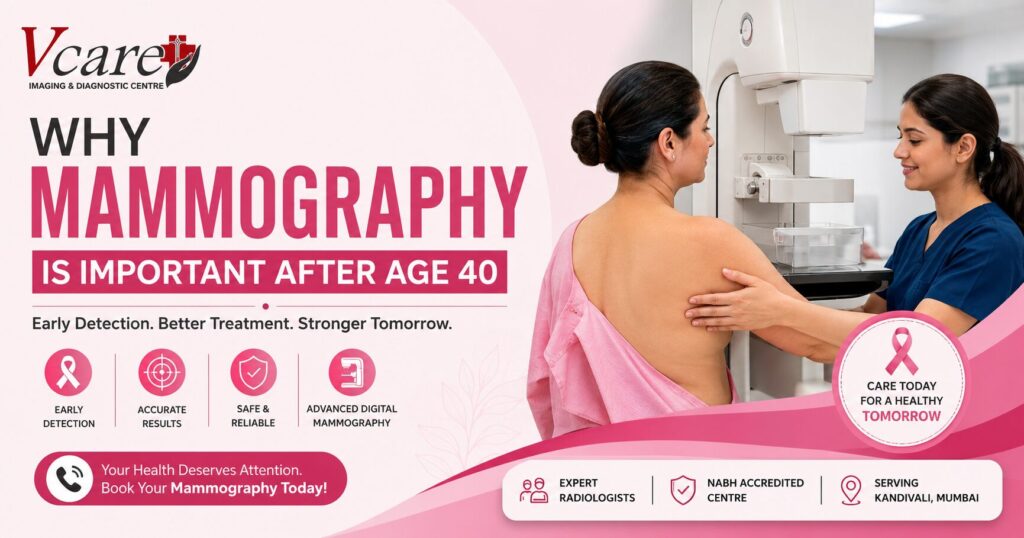
Why Mammography After Age 40 is Essential for Women’s Health
As women age, regular health screenings become increasingly important, especially for breast health. One of the most recommended diagnostic tests for women above 40 is a mammography test. Doctors worldwide advise women to begin routine mammography after age 40 because early detection of breast abnormalities can significantly improve treatment outcomes and survival rates.
Breast cancer is one of the most common cancers among women, but with timely screening and advanced diagnostic imaging, it can often be detected at an early stage. At Vcare Imaging & Diagnostic Centre, advanced digital mammography services help women take proactive steps toward better health and early diagnosis.
What is Mammography?
Mammography is a specialized breast imaging test that uses low-dose X-rays to detect abnormalities in breast tissue. It helps identify small lumps, calcifications, or signs of breast cancer even before symptoms appear.
There are mainly two types of mammography:
- Screening Mammography – Performed routinely for women without symptoms
- Diagnostic Mammography – Recommended when symptoms like lumps, pain, or nipple discharge are present
Modern digital mammography provides clearer images and improves the accuracy of breast cancer screening.
Why Mammography After Age 40 is Important
1. Early Detection of Breast Cancer

The biggest advantage of mammography after age 40 is early detection. Breast cancer often develops silently without noticeable symptoms in the initial stages. Mammograms can detect cancer years before it becomes physically noticeable.
Early diagnosis can:
- Increase treatment success rates
- Reduce complications
- Lower the need for aggressive treatments
- Improve survival chances
2. Breast Cancer Risk Increases with Age

As women grow older, the risk of developing breast cancer gradually increases. Women above 40 are more likely to develop breast tissue changes that require medical evaluation.
Regular breast cancer screening helps monitor these changes and ensures timely medical attention if needed.
3. Mammography Can Detect Tiny Abnormalities
A mammography test can identify:
- Small tumors
- Calcium deposits
- Cysts
- Dense breast tissue changes
- Early-stage cancer cells
These abnormalities are often too small to be felt during a physical examination.
4. Helps in Preventive Healthcare
Preventive healthcare focuses on detecting health conditions before symptoms worsen. Routine mammography after age 40 is considered an essential preventive health screening for women.
Doctors usually recommend:
- Annual mammography for women above 40
- Earlier screening for women with family history or high risk factors
Who Should Get a Mammography Test?
A mammography test is recommended for:
- Women aged 40 and above
- Women with a family history of breast cancer
- Women experiencing breast pain or lumps
- Women with nipple discharge
- Women with dense breast tissue
- Women with previous breast health concerns
Consulting a radiologist or healthcare professional can help determine the right screening schedule.
Common Symptoms That Should Not Be Ignored
Even though routine screening is important, women should immediately consult a doctor if they notice:
- Lump in the breast or underarm
- Breast pain
- Skin dimpling
- Changes in breast shape or size
- Nipple discharge
- Redness or irritation
A timely breast imaging test can help identify the exact cause.
How to Prepare for a Mammography Test
Preparing for a mammography test is simple. Here are a few useful tips:
- Avoid deodorants or perfumes on the day of the scan
- Wear comfortable two-piece clothing
- Carry previous imaging reports if available
- Inform the technician about any symptoms or breast implants
The procedure usually takes around 15–20 minutes.
Is Mammography Painful?
Many women worry about discomfort during the test. Mammography may cause mild pressure for a few seconds while images are captured, but the procedure is generally quick and tolerable.
The benefits of early detection far outweigh temporary discomfort.
Benefits of Digital Mammography
Modern digital mammography offers several advantages over traditional systems:
- Faster imaging process
- Better image quality
- More accurate detection
- Lower radiation exposure
- Easier image storage and comparison
Digital imaging technology plays an important role in accurate breast cancer diagnosis.
Why Choose Vcare Imaging & Diagnostic Centre for Mammography in Mumbai?
Choosing the right diagnostic centre is essential for accurate reporting and patient comfort. Vcare Imaging & Diagnostic Centre offers advanced diagnostic imaging services with experienced radiologists and modern technology.
Highlights:
- Advanced Digital Mammography
- Experienced Diagnostic Experts
- Comfortable Patient Care
- Accurate Reporting
- Modern Imaging Equipment
- Convenient Appointment Scheduling
Women looking for a reliable mammography test in Mumbai can benefit from professional diagnostic support and quality imaging services.
Conclusion
Regular mammography after age 40 is one of the most effective ways to protect women’s breast health. Early detection through routine screening can save lives, reduce treatment complications, and improve long-term health outcomes.
Women should never ignore regular breast cancer screening and preventive health checkups. With advanced imaging technology and expert diagnostic care, early diagnosis becomes easier and more accurate.
If you are planning a mammography test in Mumbai, consult experienced professionals at Vcare Imaging & Diagnostic Centre for reliable and advanced breast imaging services.
1. At what age should women start mammography screening?
Most doctors recommend starting routine mammography after age 40.
2. How often should mammography be done?
Women above 40 are generally advised to undergo mammography once every year.
3. Is mammography safe?
Yes, mammography uses very low-dose radiation and is considered safe for routine screening.
4. Can mammography detect cancer early?
Yes, mammography is highly effective in detecting early-stage breast cancer before symptoms appear.
5. How long does a mammography test take?
The procedure usually takes about 15 to 20 minutes.