
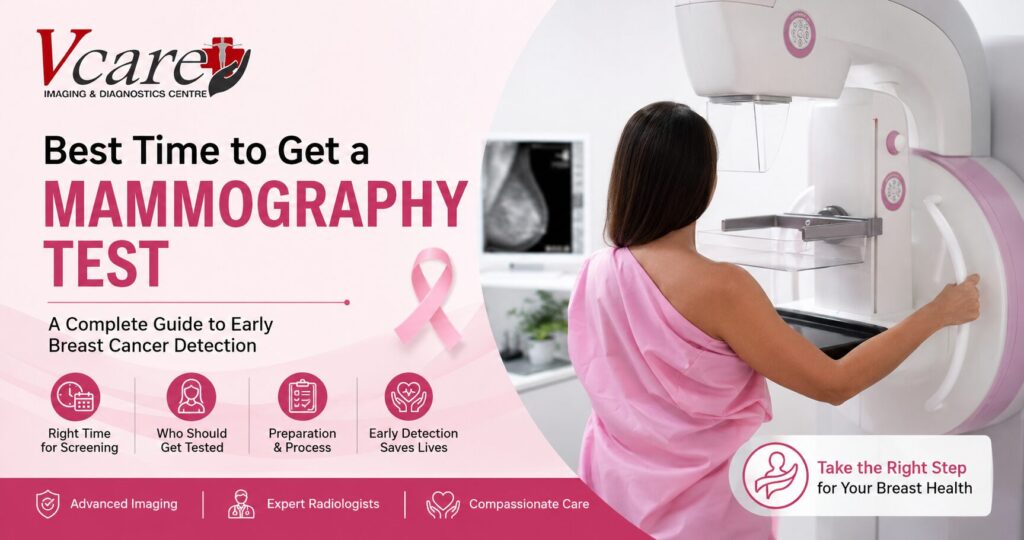
Best Time to Get a Mammography Test: Everything You Need to Know
Breast cancer is one of the most common cancers affecting women worldwide. The good news is that early detection through regular mammography screening significantly increases the chances of successful treatment. Many women often wonder, “What is the best time to get a mammography test?” Understanding the right age, timing, and preparation for this screening can help detect abnormalities before symptoms even appear.
At VCare Imaging & Diagnosis Center, we believe that awareness and timely screening play a vital role in maintaining breast health. This comprehensive guide explains when you should schedule your mammography, factors that influence the timing, preparation tips, and frequently asked questions.
What Is a Mammography Test?

A mammography test is a specialized X-ray examination of the breast designed to detect early signs of breast cancer and other breast abnormalities. It can identify tiny lumps or calcium deposits that may not be noticeable during a physical examination.
Mammograms are considered the gold standard for breast cancer screening because they can detect cancer years before it becomes physically noticeable.
Why Is Mammography Important?
Early-stage breast cancer often develops without any obvious symptoms. A routine mammogram can detect changes in breast tissue long before a lump becomes large enough to feel.
Benefits of Mammography
- Detects breast cancer at an early stage
- Improves treatment success rates
- Reduces breast cancer mortality
- Identifies benign breast conditions
- Helps monitor women with a family history of breast cancer
- Provides peace of mind through regular health screening
Early detection often means less invasive treatment and better long-term outcomes.
Best Time to Get a Mammography Test
The best time to get a mammography test depends on several factors, including your age, menstrual cycle, family history, and overall risk of breast cancer.
If You Are Between 40 and 49 Years
Women in this age group should discuss screening recommendations with their healthcare provider. Depending on individual risk factors, mammography may be recommended every one to two years.
If You Are 50 Years and Above
Most healthcare professionals recommend getting a mammogram every one to two years. Regular screening during this age group plays a crucial role in detecting breast cancer early.
If You Have a Family History of Breast Cancer
Women with a strong family history or genetic mutations such as BRCA1 or BRCA2 may need to begin mammography screening before the age of 40. Your doctor may also recommend breast MRI in addition to mammography.
Best Time During Your Menstrual Cycle
If you are menstruating, scheduling your mammogram at the right time can improve comfort and image quality.
The ideal time is:
- About 7–14 days after the first day of your menstrual period
- During this phase, breasts are generally less tender and less swollen
Avoid scheduling your mammogram just before your period because breast tenderness can make the examination more uncomfortable.
Signs That You Should Not Delay a Mammography
Even if your routine screening is not yet due, consult your doctor immediately if you notice:
- A lump in the breast
- Changes in breast size or shape
- Skin dimpling
- Nipple discharge
- Persistent breast pain
- Redness or swelling
- Inverted nipple
- Thickening of breast tissue
Diagnostic mammography may be recommended instead of routine screening.
How Often Should You Get a Mammogram?
The screening interval depends on your age and health history.
| Age Group | Recommended Frequency |
|---|---|
| Under 40 | Only if recommended by your doctor |
| 40–49 | Every 1–2 years (based on risk) |
| 50–74 | Every 1–2 years |
| Above 75 | As advised by your healthcare provider |
How to Prepare for a Mammography Test
Preparing properly ensures accurate imaging results.
Before Your Appointment
- Wear a two-piece outfit
- Avoid applying deodorant, talcum powder, lotion, or perfume on your chest and underarms
- Bring previous mammography reports if available
- Inform the radiologist if you are pregnant or breastfeeding
- Mention any breast implants or previous breast surgeries
These simple steps help improve image quality and reduce the need for repeat scans.
What Happens During the Procedure?
A mammography examination usually takes around 15 to 30 minutes.
During the procedure:
- The technologist positions your breast on the mammography machine.
- The breast is gently compressed between two plates.
- X-ray images are taken from different angles.
- The process is repeated for the other breast.
Compression may feel uncomfortable for a few seconds, but it is necessary to obtain clear images while minimizing radiation exposure.
Is Mammography Painful?
Most women describe mammography as mildly uncomfortable rather than painful.
The amount of discomfort varies depending on:
- Breast sensitivity
- Hormonal changes
- Compression pressure
- Individual pain tolerance
Scheduling your appointment after your menstrual period often makes the examination more comfortable.
Can Mammography Detect Breast Cancer Early?
Yes.
Mammography can detect breast cancer before symptoms appear, often identifying tumors that are too small to be felt during a self-examination.
Studies have consistently shown that regular mammography screening reduces deaths from breast cancer by enabling earlier diagnosis and treatment.
Who Is at Higher Risk?
Certain women may require earlier or more frequent screening.
Risk factors include:
- Family history of breast cancer
- Genetic mutations (BRCA1 or BRCA2)
- Previous breast cancer
- Dense breast tissue
- Radiation therapy to the chest at a young age
- Obesity
- Smoking
- Alcohol consumption
- Late menopause
- Hormone replacement therapy
If you have one or more of these risk factors, consult your healthcare provider about a personalized screening schedule.
Benefits of Regular Mammography Screening
Routine mammograms offer several long-term health benefits.
Early Detection
Detects cancer before symptoms develop.
Better Treatment Outcomes
Earlier diagnosis often leads to less invasive treatment options and improved survival rates.
Reduced Healthcare Costs
Treating cancer at an early stage is generally less complex and less expensive than treating advanced disease.
Improved Peace of Mind
Regular screening helps women stay proactive about their breast health.
Common Myths About Mammography
Myth 1: Mammograms Cause Cancer
False. Mammography uses a very low dose of radiation, and the benefits of early detection far outweigh the minimal risk.
Myth 2: Only Women with Symptoms Need Mammograms
False.
Many breast cancers have no symptoms in their early stages, which is why routine screening is essential.
Myth 3: Breast Self-Exams Replace Mammography
False.
Breast self-examinations are helpful for becoming familiar with your breasts, but they do not replace mammography. Imaging can detect abnormalities long before they can be felt.
Frequently Asked Questions
What is the best age to start mammography?
Many women begin routine screening around age 40, but the appropriate age depends on personal risk factors and your healthcare provider’s advice.
Can younger women get a mammogram?
Yes. If you have symptoms or are at higher risk due to family history or genetic factors, your doctor may recommend a mammogram before age 40.
How long does a mammography test take?
The entire appointment usually takes 15–30 minutes, while the imaging itself only takes a few minutes.
Is mammography safe?
Yes. Mammography is a safe and widely used screening tool that uses a low dose of radiation.
Can men undergo mammography?
Although rare, men can develop breast cancer. If a man has symptoms such as a breast lump or nipple discharge, a healthcare provider may recommend diagnostic imaging, including mammography in certain cases.
Why Choose VCare Imaging & Diagnosis Center?
At VCare Imaging & Diagnosis Center, we are committed to providing accurate, comfortable, and patient-focused diagnostic services.
Our advantages include:
- Advanced digital mammography technology
- Experienced radiologists
- High-quality diagnostic imaging
- Comfortable and hygienic environment
- Timely reporting
- Personalized patient care
- Convenient appointment scheduling
Our goal is to help patients receive accurate diagnoses while ensuring a smooth and reassuring experience.
Final Thoughts
Knowing the best time to get a mammography test is an important step toward protecting your breast health. Whether you are scheduling your first screening or maintaining a regular screening routine, timely mammography can help detect breast cancer at its earliest and most treatable stage.
If you are over 40, have a family history of breast cancer, or notice any unusual breast changes, don’t delay your screening. Early detection saves lives, and regular mammograms remain one of the most effective tools for maintaining long-term breast health.
Book your mammography appointment at VCare Imaging & Diagnosis Center today and take a proactive step toward early breast cancer detection and better health.
