
What Is a DEXA Scan? Benefits, Procedure & Who Should Get a Bone Density Test
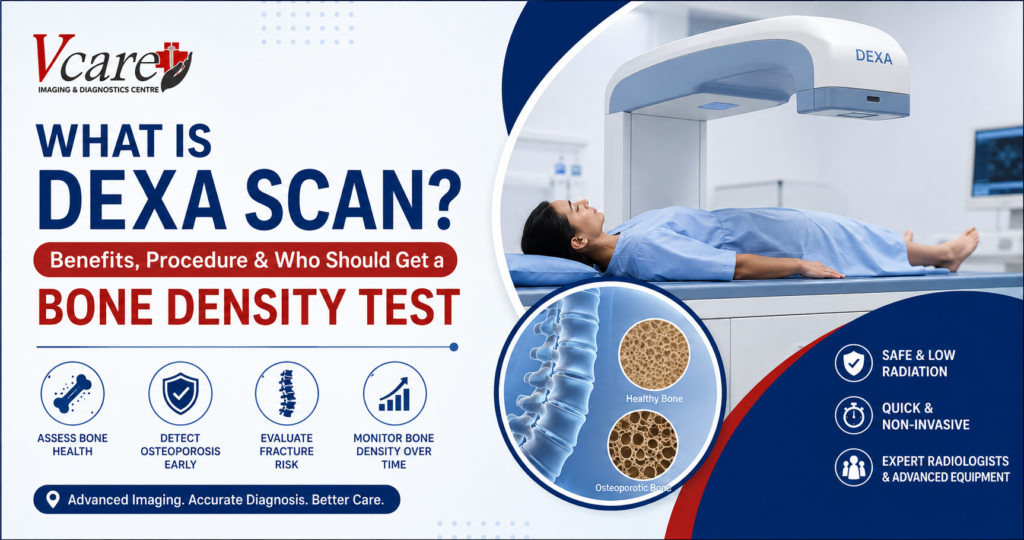
A DEXA scan is a specialized imaging test used to measure bone mineral density and assess bone health. DEXA stands for Dual-Energy X-ray Absorptiometry and is also commonly called a DXA scan or bone density test.
The test uses a very small amount of X-ray radiation to measure bone mineral density, usually at the hip and lower spine. It is widely used to help diagnose osteoporosis, assess fracture risk, and monitor changes in bone density over time.
A bone density test can be particularly useful when there are concerns about weakened bones or an increased risk of osteoporosis. Your doctor may recommend a DEXA scan based on your age, medical history, previous fractures, medications, or other risk factors.
If you have been advised to undergo a DEXA scan in Kandivali, understanding the procedure and what the results mean can help you feel more prepared.
Why Is a Bone Density Test Important?
Bones naturally change throughout life. Bone loss can become more significant with age and may increase the risk of fractures.
Osteoporosis is a condition in which bones become weaker and more fragile, increasing the likelihood of fractures. Because bone loss can develop without obvious symptoms, a bone density test can help identify reduced bone mineral density before a serious fracture occurs.
A DEXA scan can help healthcare professionals:
- Measure bone mineral density
- Identify low bone density
- Help assess osteoporosis
- Estimate fracture risk
- Monitor bone density over time
- Evaluate the response to osteoporosis treatment
A DEXA scan does not predict with certainty whether an individual will experience a fracture. Instead, the results are considered along with other clinical risk factors to help doctors assess bone health and decide on appropriate management.
What Does a DEXA Scan Measure?
A DEXA bone density scan measures bone mineral density, commonly abbreviated as BMD.
During the test, low-dose X-rays are used to measure the amount of X-ray energy absorbed by bone and soft tissue. The information is processed to calculate bone density measurements.
The most commonly examined areas are:
- Hip
- Lower spine or lumbar spine
- In some cases, the forearm or other areas may be assessed
The hip and spine are commonly used because these areas are important for assessing bone health and fracture risk.
7 Benefits of a DEXA Scan
1. Helps Measure Bone Mineral Density
The primary purpose of a DEXA scan is to measure bone mineral density.
This provides doctors with objective information about the strength and mineral content of bones and can help identify low bone density.
2. Helps Detect Osteoporosis
A DEXA scan is one of the standard imaging methods used to diagnose osteoporosis. It can identify reduced bone density and help healthcare professionals assess whether further evaluation or treatment may be appropriate.
Early identification can be valuable because osteoporosis may progress without noticeable symptoms until a fracture occurs.
3. Helps Assess Fracture Risk
Low bone density is associated with an increased risk of osteoporotic fractures.
DEXA results can be considered alongside factors such as age, previous fractures, family history, body weight, lifestyle factors, and certain medical conditions when assessing fracture risk.
4. Supports Monitoring of Bone Health
A bone density test may also be used to monitor changes in bone density over time.
For people receiving treatment for osteoporosis or other conditions associated with bone loss, follow-up DEXA scans may help doctors evaluate changes and treatment response.
5. Quick and Non-Invasive
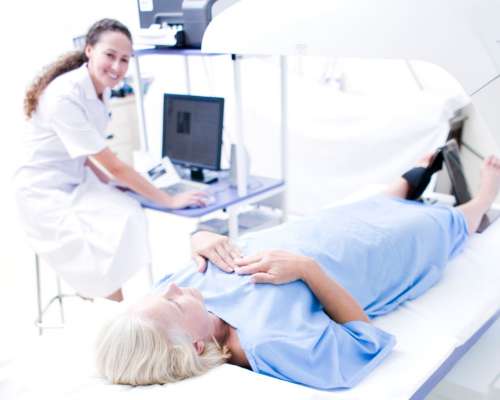
A DEXA scan is generally a quick, non-invasive imaging examination. No anesthesia is normally required, and the patient typically lies on a padded examination table while the scanner obtains measurements.
6. Uses a Very Low Radiation Dose
DEXA uses a small amount of ionizing radiation. The radiation exposure is considerably lower than that of many conventional X-ray examinations.
Even so, always inform your doctor and the imaging technologist if you are pregnant or may be pregnant.
7. Helps Doctors Make Informed Decisions
A DEXA scan provides measurable information about bone mineral density.
When interpreted alongside your medical history and other risk factors, the results can help your healthcare provider make informed decisions about further evaluation, monitoring, or treatment.
Who Should Get a DEXA Scan?
Not everyone needs a DEXA scan routinely. The decision depends on individual risk factors and your doctor’s recommendation.
A bone density test may be considered for people who have an increased risk of osteoporosis or bone loss.
Your doctor may recommend a DEXA scan if you have:
- A history of a fracture following relatively minor trauma
- A family history of osteoporosis or osteoporotic fracture
- Certain medical conditions associated with bone loss
- Long-term use of medications that can reduce bone density
- Significant risk factors for osteoporosis
- Previous findings suggesting reduced bone density
- A need to monitor treatment for osteoporosis
Postmenopausal women and older adults may have an increased risk of osteoporosis, but bone loss can also affect men and younger individuals in certain circumstances. The appropriate timing of a DEXA bone density scan should therefore be based on individual risk factors and medical advice.
DEXA Scan for Women
Bone density can decline after menopause, making bone health an important consideration for women as they age.
A doctor may recommend a DEXA scan for women based on age, menopause status, fracture history, family history, medications, and other risk factors.
Women who have additional risk factors for osteoporosis may need assessment earlier than someone without those risk factors.
If you are concerned about bone health after menopause, discuss your individual risk factors with your doctor to determine whether a bone density test is appropriate.
DEXA Scan for Men
Osteoporosis is not limited to women.
Men can also develop low bone density, particularly when certain medical conditions, medications, lifestyle factors, or age-related changes increase their risk.
A doctor may recommend a DEXA scan for men when there are specific risk factors for osteoporosis or bone loss.
What Happens During a DEXA Scan Procedure?
Understanding the DEXA scan procedure can make the experience easier for first-time patients.
Step 1: Patient Preparation
Before the examination, the imaging team may ask about your medical history, medications, previous imaging examinations, and any relevant health conditions.
You should tell your doctor or technologist if you may be pregnant.
Step 2: Positioning
You will usually lie on a padded examination table.
For a central DEXA examination, the scanner generally evaluates the hip and lower spine. Your position may be adjusted so that the required areas can be accurately assessed.
Step 3: Scanning
The DEXA machine passes a scanning device over the areas being examined.
You will need to remain still during the scan to help obtain accurate measurements.
Step 4: Image and Measurement Analysis
The machine processes the measurements and calculates bone mineral density.
A radiologist or appropriate healthcare professional interprets the results and prepares a report for your referring doctor.
How Long Does a DEXA Scan Take?
A DEXA scan is generally a relatively quick examination.
The exact duration depends on the equipment used and the areas being examined. A typical central DXA examination may take approximately 10 to 30 minutes.
Your imaging centre can provide more specific information about appointment duration.
How to Prepare for a DEXA Scan
One advantage of a DEXA scan is that it usually requires little preparation.
However, there are some important points to remember.
Avoid Calcium Supplements Before the Test
You may be advised not to take calcium supplements for at least 24 hours before the examination. Follow the instructions provided by your doctor or diagnostic centre.
Wear Comfortable Clothing
Wear loose, comfortable clothing and avoid clothing with metal zippers, belts, buttons, or other metal components when possible.
Inform the Technologist About Recent Tests
Tell your doctor or technologist if you recently had a barium examination or received contrast material for certain imaging tests, as you may need to wait before undergoing a DEXA examination.
Inform the Team About Pregnancy
If there is a possibility that you are pregnant, tell your doctor and the imaging technologist before the examination.
Is a DEXA Scan Painful?
A DEXA scan is generally painless.
You will normally lie on a padded examination table while the scanner obtains measurements.
You may need to remain still during the examination, but the scan itself does not normally involve injections, anesthesia, or invasive procedures.
Understanding DEXA Scan Results
DEXA reports commonly include measurements called a T-score and Z-score.
What Is a T-Score?
The T-score compares your bone mineral density with the average bone density of a healthy young adult reference population.
For certain adult patients, the T-score is used in the assessment of bone health and osteoporosis.
According to RadiologyInfo, a T-score of -1 and above is considered normal, a score between -1.1 and -2.4 is classified as low bone mass or osteopenia, and a score of -2.5 or lower is in the osteoporosis range.
However, the interpretation of a DEXA result should not be based on the number alone. Your age, sex, medical history, fracture history, medications, and other clinical factors may also be important.
What Is a Z-Score?
The Z-score compares bone density with people of similar age, sex, and body size.
An unusually low Z-score may indicate that further medical evaluation is needed, depending on the individual circumstances.
Always discuss your DEXA report with your doctor rather than interpreting the numbers independently.
DEXA Scan vs Regular X-Ray
A regular X-ray and a DEXA scan both use X-ray technology, but they have different purposes.
A conventional X-ray is primarily used to create images of bones and other structures and can help identify fractures and certain abnormalities.
A DEXA scan, on the other hand, is specifically designed to measure bone mineral density.
| Feature | DEXA Scan | Regular X-Ray |
|---|---|---|
| Main purpose | Measures bone mineral density | Produces images of body structures |
| Osteoporosis assessment | Yes | Limited |
| Bone density measurement | Yes | No |
| Radiation dose | Very low | Varies by examination |
| Common areas | Hip and spine | Depends on the examination |
| Non-invasive | Yes | Yes |
Your doctor will recommend the appropriate imaging test based on your symptoms, medical history, and diagnostic requirements.
DEXA Scan vs Other Bone Density Tests
DEXA is the established standard method for measuring bone mineral density in many clinical situations. Other techniques, including peripheral bone density devices and quantitative CT, may be used in specific circumstances.
A bone density test should therefore be selected based on the patient’s clinical needs rather than simply choosing the most convenient test.
Why Choose VCare Imaging & Diagnostic Centre for a DEXA Scan in Kandivali?
If you are looking for a DEXA scan in Kandivali, choosing a diagnostic centre with appropriate imaging technology and experienced professionals is important.
VCare Imaging & Diagnostic Centre in Kandivali East provides a range of advanced imaging and diagnostic services, including DEXA/BMD, MRI, CT, mammography, ultrasound, Doppler, X-ray, cardiac diagnostics, pathology and other specialized investigations.
VCare also highlights specialist radiology expertise, digital reporting and a patient-focused diagnostic approach.
For patients searching for a bone density test in Mumbai, having access to multiple diagnostic services at one centre can be convenient, particularly when additional investigations are recommended by a doctor.
When Should You Consider a Bone Density Test?
There is no single age that applies to everyone.
The need for a bone density test depends on your individual risk factors.
Your doctor may consider factors such as:
- Age
- Menopause status
- Previous fractures
- Family history
- Certain medications
- Medical conditions associated with bone loss
- Low body weight
- Lifestyle factors
- Previous bone density results
For people suspected of having low bone mineral density, DXA of the lumbar spine and hip is generally considered an appropriate initial imaging test.
If you are unsure whether you need a DEXA scan, consult your doctor for personalized advice.
Frequently Asked Questions About DEXA Scan
What is a DEXA scan used for?
A DEXA scan is used to measure bone mineral density and help assess conditions such as osteoporosis and fracture risk. It can also be used to monitor changes in bone density over time.
Is a DEXA scan safe?
DEXA uses a very low dose of X-ray radiation and is considered a safe diagnostic examination when appropriately performed. Tell your doctor or technologist if you may be pregnant.
Is a DEXA scan painful?
No. A DEXA scan is generally painless and non-invasive.
How long does a DEXA scan take?
A typical DEXA examination may take approximately 10 to 30 minutes, depending on the equipment and areas being examined.
Do I need to fast before a DEXA scan?
DEXA usually requires little preparation, and you can generally eat normally. However, calcium supplements may need to be avoided for at least 24 hours before the test. Always follow the instructions provided by your doctor or diagnostic centre.
What is the difference between DEXA and DXA?
DEXA and DXA refer to the same type of bone density examination. Both abbreviations refer to dual-energy X-ray absorptiometry.
Can men get a DEXA scan?
Yes. Men can also develop osteoporosis and low bone density. A doctor may recommend a DEXA scan when specific risk factors are present.
Can a DEXA scan detect osteoporosis?
A DEXA scan is commonly used to help diagnose osteoporosis by measuring bone mineral density. The results are interpreted along with clinical risk factors and other medical information.
Where can I get a DEXA scan in Kandivali?
VCare Imaging & Diagnostic Centre in Kandivali East offers DEXA/BMD as part of its advanced diagnostic imaging services. You can contact the centre to confirm appointment availability and test requirements.
Conclusion: Take Care of Your Bone Health
A DEXA scan is an important diagnostic tool for measuring bone mineral density and assessing bone health. It can help doctors identify low bone density, assess osteoporosis risk, and monitor changes over time.
A bone density test is generally quick, painless, non-invasive, and uses a very low dose of radiation. However, not everyone needs the test at the same time. Your doctor can determine whether a DEXA scan is appropriate based on your age, medical history, risk factors, and overall health.
If your doctor has recommended a DEXA scan in Kandivali, VCare Imaging & Diagnostic Centre offers DEXA/BMD along with a comprehensive range of imaging and diagnostic services.
For more information about a DEXA scan or bone density test in Mumbai, contact VCare Imaging & Diagnostic Centre and discuss your diagnostic requirements with the healthcare team.
