
DEXA Scan for Osteoporosis: When Should You Get a Bone Density Test?
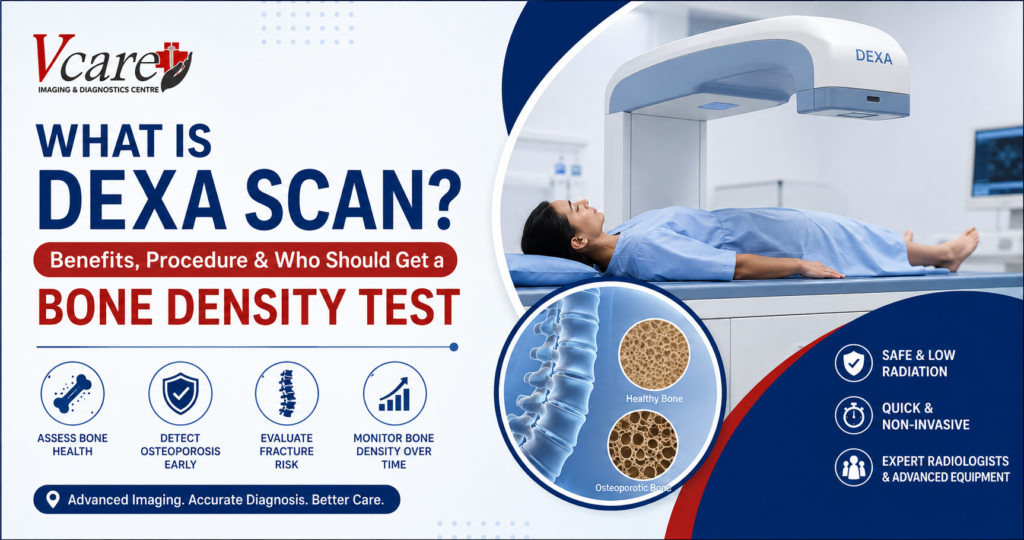
DEXA Scan for Osteoporosis: When Should You Get a Bone Density Test? Osteoporosis can develop silently, weakening bones without causing noticeable symptoms until a fracture occurs. A DEXA scan for osteoporosis is one of the most commonly used tests to measure bone mineral density and help identify low bone density and osteoporosis before a serious fracture happens. But when should you get a DEXA scan? Is a bone density test only recommended for older adults, or can younger people also need one? Understanding when bone density testing is appropriate can help you take timely steps to protect your bone health. In this guide, VCare Imaging and Diagnostic Centre explains who may need a DEXA scan for bone density, how the test works, what the results mean, and when your doctor may recommend osteoporosis screening. What Is a DEXA Scan? A DEXA scan, also known as a dual-energy X-ray absorptiometry scan, is a specialized imaging test used to measure bone mineral density (BMD). A bone density test commonly examines areas such as the hip and lower spine because these locations are particularly important when assessing fracture risk. Unlike a standard X-ray, a DEXA scan is designed specifically to measure bone density. The results can help doctors identify whether your bone density is within the expected range or whether you may have osteopenia or osteoporosis. What Is Osteoporosis? Osteoporosis is a condition in which bones become weaker and more fragile, increasing the risk of fractures. Bone tissue is constantly being broken down and rebuilt. As people age, bone loss can gradually become greater than new bone formation. This can reduce bone density and make bones more susceptible to fractures. Osteoporosis often develops without obvious symptoms. For this reason, osteoporosis screening and appropriate bone density testing can be important for people who have risk factors. How Does a DEXA Scan Help Detect Osteoporosis? A DEXA scan for osteoporosis measures bone mineral density and provides a numerical score that doctors can use when assessing bone health. The test commonly provides a T-score, which compares your bone density with that of a healthy young adult reference population. Generally: Your doctor will interpret your DEXA scan results along with your age, medical history, risk factors and other clinical information. When Should You Get a Bone Density Test? The appropriate time for a bone density test for osteoporosis depends on your age, sex, health history and risk factors. A doctor may recommend a DEXA scan if you have an increased risk of bone loss or fractures. 1. Women After Menopause Bone loss can accelerate after menopause because of hormonal changes, particularly reduced estrogen levels. For this reason, postmenopausal women may be advised to discuss osteoporosis screening and DEXA testing with their healthcare provider. 2. Older Adults The risk of osteoporosis generally increases with age. Older adults may be recommended a DEXA scan for bone density as part of osteoporosis screening, particularly when other risk factors are present. 3. People With a Previous Fragility Fracture A fracture resulting from a relatively minor fall or injury can sometimes indicate reduced bone strength. If you have experienced a fragility fracture, your doctor may recommend a bone density test to assess your risk of osteoporosis and future fractures. 4. People With a Family History of Osteoporosis Genetics can influence bone health. A family history of osteoporosis or hip fracture may increase your risk. If osteoporosis runs in your family, discuss your individual risk with your healthcare provider to determine whether a DEXA scan is appropriate. 5. People With Certain Medical Conditions Some health conditions can contribute to reduced bone density. Depending on your medical history, your doctor may recommend a bone density test if you have a condition that may affect bone metabolism or increase fracture risk. 6. People Taking Certain Long-Term Medications Some medications can affect bone health when used for prolonged periods. For example, long-term corticosteroid treatment can increase the risk of bone loss. Your doctor may recommend a DEXA scan depending on the medication, dose, duration and your other risk factors. 7. People With Low Body Weight or Other Risk Factors Low body weight and certain lifestyle or nutritional factors may be associated with an increased risk of low bone density. If you have multiple osteoporosis risk factors, your healthcare provider may recommend bone density testing even if you have not experienced a fracture. What Happens During a DEXA Scan? A DEXA scan is generally a quick and non-invasive examination. During the procedure: The procedure is generally painless, and there is usually no recovery period required after the examination. How Long Does a DEXA Scan Take? A DEXA scan is typically a relatively quick examination. The exact duration can vary depending on the areas being scanned and the imaging center’s protocol. Your diagnostic center can provide specific information about the expected examination time and preparation requirements when you schedule your appointment. How to Prepare for a DEXA Scan Preparation requirements can vary depending on the imaging center and your individual circumstances. Before your appointment, you may be advised to: Always follow the instructions provided by your healthcare provider or imaging center. What Do DEXA Scan Results Mean? The main measurement used to assess osteoporosis in many adults is the T-score. Understanding the DEXA Scan T-Score The T-score indicates how your bone mineral density compares with the bone density of a healthy young adult reference population. A lower T-score generally indicates lower bone density. Your doctor may use the T-score along with other clinical factors to determine whether you have normal bone density, osteopenia or osteoporosis. What Is a Z-Score? A Z-score compares your bone density with that of people of similar age, sex and other relevant characteristics. Z-scores can be particularly useful in certain younger individuals and specific clinical situations. A healthcare professional should interpret your DEXA scan results rather than relying on the score alone. Osteopenia vs Osteoporosis: What Is the Difference? Osteopenia and osteoporosis both involve reduced bone density, but they are not the same.
DEXA Scan for Osteoporosis: When Should You Get a Bone Density Test? Read More »