
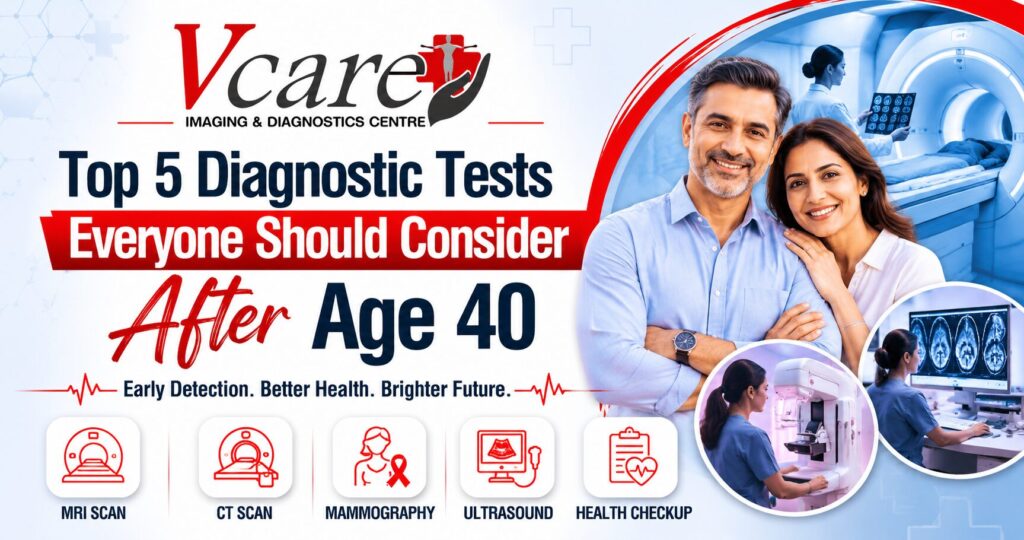
Top 5 Diagnostic Tests Everyone Should Consider After Age 40
Top 5 Diagnostic Tests After Age 40 Everyone Should Consider Turning 40 is an important milestone in life, and it is also the right time to take your health more seriously. As we age, the risk of developing conditions such as heart disease, diabetes, hypertension, osteoporosis, liver disorders, and certain cancers increases significantly. Regular diagnostic tests after age 40 can help detect health issues at an early stage, allowing timely treatment and better outcomes. Many serious diseases develop silently without noticeable symptoms. This is why preventive healthcare and routine health screenings are essential for maintaining long-term wellness. At VCare Imaging & Diagnostic Center, we believe that early diagnosis is the key to effective treatment and a healthier future. In this guide, we will discuss the top 5 diagnostic tests everyone should consider after age 40 and why these screenings are crucial for your overall health. Why Are Diagnostic Tests Important After Age 40? After the age of 40, the body’s metabolism begins to slow down, and the likelihood of chronic health conditions increases. Regular health checkups after 40 can help: Preventive healthcare is always more effective and affordable than treating advanced-stage illnesses. 1. Full Body Health Checkup A comprehensive full-body health checkup is one of the most important health screenings for individuals above 40. What Does It Include? Benefits Doctors generally recommend an annual health checkup after the age of 40 to maintain optimal health. 2. MRI Scan for Early Detection of Internal Conditions An MRI Scan uses advanced magnetic imaging technology to provide detailed images of organs, joints, soft tissues, and the brain. Why Is MRI Important After 40? As people age, they become more susceptible to: Common MRI Examinations MRI scans help doctors diagnose conditions accurately without exposing patients to radiation. 3. CT Scan for Comprehensive Internal Assessment A CT Scan combines multiple X-ray images to create detailed cross-sectional views of the body. Conditions Detected Through CT Scan Who Should Consider a CT Scan? Individuals with: A CT scan plays a vital role in early disease detection and treatment planning. 4. Mammography and Breast Screening (For Women) Breast cancer remains one of the most common cancers among women worldwide. Regular digital mammography can significantly improve the chances of early detection. Why Mammography Is Essential After 40 Healthcare experts recommend annual breast screening for women aged 40 and above, especially if they have: Benefits of Mammography Early detection can save lives and reduce the need for extensive treatment. 5. Ultrasound and Abdominal Screening An ultrasound scan is a safe, non-invasive diagnostic test that helps evaluate internal organs. What Can an Ultrasound Detect? Why Is It Recommended After 40? Lifestyle-related conditions such as obesity, diabetes, and fatty liver disease become more common with age. Regular ultrasound screening helps identify these problems before they become severe. Additional Health Screenings to Consider Besides the top five diagnostic tests after age 40, healthcare professionals may also recommend: Bone Density Scan To assess osteoporosis risk and bone health. Cardiac Screening Including ECG, 2D Echo, and stress tests for heart health evaluation. Blood Pressure Monitoring To detect hypertension and cardiovascular risks. Colon Cancer Screening Especially for individuals with a family history of colorectal cancer. Liver Elastography For evaluating liver stiffness and detecting liver fibrosis. Signs That Indicate You Need Diagnostic Testing Do not wait for symptoms to become severe. Consider diagnostic screening if you experience: Early diagnosis leads to faster treatment and better health outcomes. How Often Should You Get Tested After 40? The frequency of diagnostic tests depends on factors such as: In general: Diagnostic Test Recommended Frequency Full Body Checkup Once a Year Blood Sugar Test Every 6-12 Months MRI Scan As Recommended by Doctor CT Scan When Clinically Required Mammography Annually After 40 Ultrasound Every 1-2 Years Always consult your healthcare provider for personalized recommendations. Why Choose VCare Imaging & Diagnostic Center? At VCare Imaging & Diagnostic Center, we provide advanced imaging and diagnostic services using modern technology and expert medical professionals. Our services include: We are committed to delivering accurate reports, timely diagnosis, and exceptional patient care to help you make informed healthcare decisions. Conclusion Regular diagnostic tests after age 40 play a critical role in maintaining long-term health and preventing serious medical conditions. A proactive approach to health screening can help detect diseases early, improve treatment outcomes, and enhance your quality of life. Whether it is a full body health checkup, MRI scan, CT scan, mammography, or ultrasound screening, investing in preventive healthcare today can protect your health for years to come. Schedule your health screening with VCare Imaging & Diagnostic Center and take the first step toward a healthier future.
Top 5 Diagnostic Tests Everyone Should Consider After Age 40 Read More »